Table of contents
Efficient land management often depends on the right equipment, especially when tackling thick vegetation or transforming landscape debris. Understanding how different mulchers and chippers perform across various terrains can save time, resources, and effort. Dive into the following sections to discover expert insights that help match equipment to terrain, optimizing results for any project.
Terrain types and their challenges
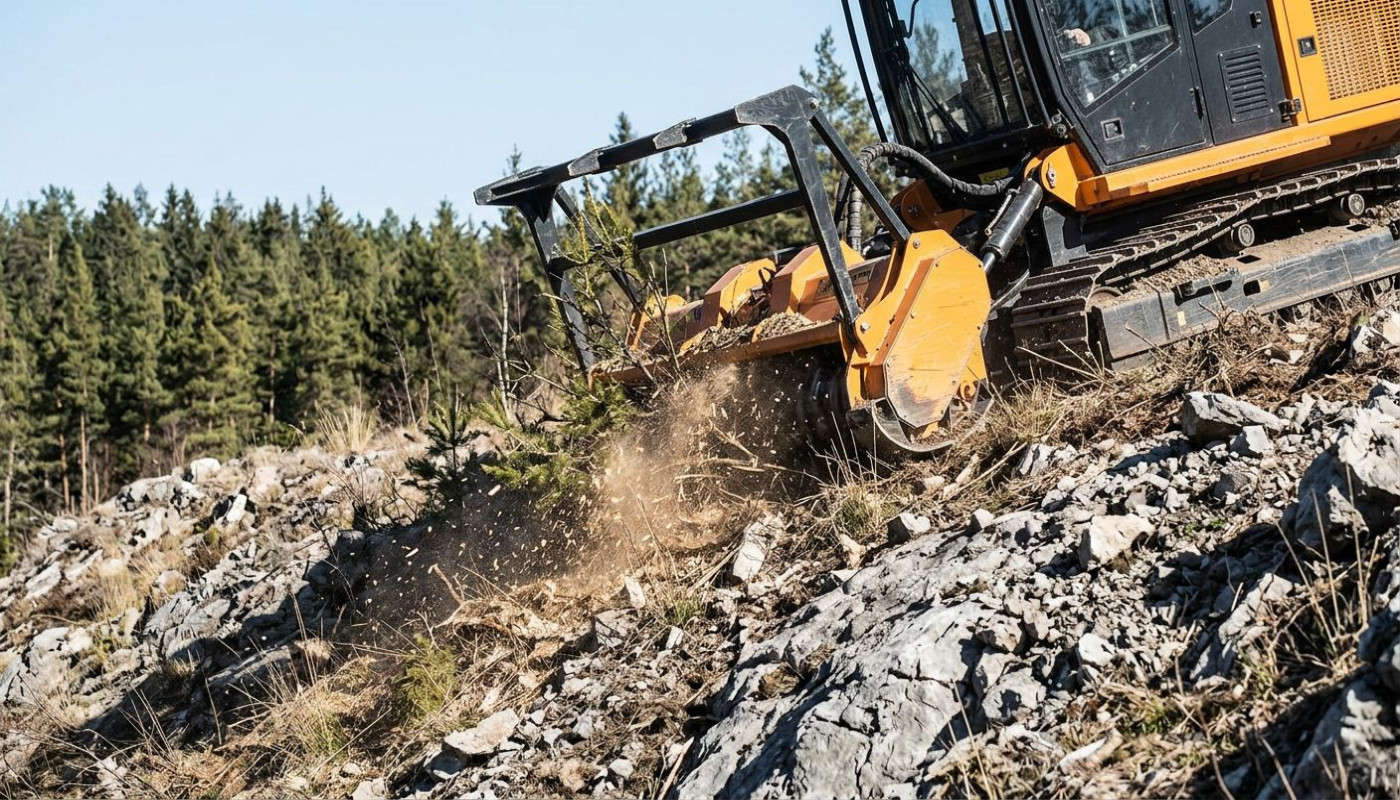
Varied terrains such as rocky ground, sloped areas, wet terrain, and flat land each present distinct terrain challenges for operators using mulchers and chippers. Rocky ground often leads to increased wear on blades and cutting mechanisms, making maintenance more frequent and requiring mulching equipment with reinforced components. In sloped environments, stability is a primary concern, as equipment may lose footing or tip without an advanced traction control system to maintain balance and grip. Wet terrain complicates operations by causing machinery to sink, clogging cutting chambers with mud, and reducing efficiency; high soil moisture levels can also lead to slippage and require specialized tires or tracks.
Soil composition significantly affects mulching equipment performance. Sandy soils allow for easier maneuverability but can accelerate abrasion on moving parts, while clay-rich soils retain water and can make wet terrain even more problematic. The density and organic content of the soil influence how effectively debris is processed, with dense soils putting additional strain on engines and chipping mechanisms. Moisture levels must also be considered, as overly saturated ground increases the likelihood of equipment becoming bogged down, and may also contribute to uneven mulching results.
Flat ground generally offers fewer obstacles, permitting a broader range of machinery and faster operation speeds. Yet, site-specific factors like hidden roots or patches of compacted earth still require attention. Operators are encouraged to weigh the unique nature of their site—factoring in terrain challenges, soil composition, and prevailing moisture levels—before selecting mulching equipment. For precision in both equipment choice and operational strategy, insights from a certified land management specialist are highly recommended, helping ensure the right balance between efficiency, safety, and equipment longevity.
Mulcher types explained
Understanding the main categories of mulchers is vital for effective landscape maintenance across varied terrains. The flail mulcher features a series of small, free-swinging knives attached to a rotating drum or shaft, making it the best mulcher for managing dense undergrowth, overgrown grass, and uneven surfaces. Its cutting head is highly adaptable to irregular ground, reducing the risk of damage from hidden debris, though it may struggle with thicker wood. Drum mulchers, equipped with a robust cylindrical cutting head fitted with heavy-duty teeth, excel in processing larger vegetation and small trees. This model offers powerful, uniform mulching across flat or gently sloping land, yet it is less agile on rocky or highly contoured landscapes. On the other hand, the disc mulcher operates with a fast-spinning disc cutting head, ideal for rapid, aggressive cutting of shrubs and hardwood up to several inches in diameter. While the disc mulcher delivers high productivity and efficient material discharge, its aggressive action can be less precise and may not suit sensitive environments where selective clearing is preferred.
Each type presents unique strengths and trade-offs when evaluated for diverse terrains. Flail mulchers are favored for versatility and safety in areas with variable topography or potential obstacles, such as parks and roadsides. Drum mulchers are widely recognized for their ability to tackle large-scale clearing in forests and plantations, though their heavier build can restrict maneuverability in tight spaces. Disc mulchers stand out in scenarios demanding speed and raw cutting power, such as land reclamation or storm cleanup, but caution is advised in rocky or urban environments due to the forceful material ejection. Choosing the best mulcher depends on a careful assessment of the cutting head design, landscape features, and specific maintenance goals, ensuring optimal performance and minimal environmental impact.
Chipper effectiveness on debris
Different chipper designs exhibit varying levels of chipper efficiency when processing organic debris such as branches, brush, and even substantial stumps. Drum chippers, for instance, are suited for high-volume branch processing and can manage mixed organic debris, while disc chippers often provide cleaner cuts and are preferred for uniform wood chips. Terrain plays a significant role in chipper performance; steep or uneven ground can hinder mobility, making the selection of a chipper with robust traction and stability features critical for stump removal and other demanding tasks.
The feed mechanism is a defining factor in both safety and operational output. Hydraulically powered systems regulate the flow of materials into the infeed chute, preventing jams and allowing consistent processing of varied debris sizes. Engine power must be matched to both the volume and density of the materials encountered—denser organic debris and larger stumps demand high-horsepower engines to maintain optimal chipper efficiency, especially in rugged landscapes. Selecting chippers with adaptable feed mechanisms and adequate engine power ensures reliable operation across diverse terrains, whether clearing storm-damaged woodland or managing regular forestry maintenance.
Safety considerations by terrain
When operating mulchers and chippers in hazardous terrain, such as steep inclines or muddy surfaces, equipment safety becomes a paramount concern. Slope stability must always be evaluated before engaging machinery, as unstable ground can significantly increase the risk of rollovers or loss of control. Operators should receive training on hazard identification and on-the-ground judgement, especially in areas where soil conditions or hidden obstacles may compromise operator safety. Modern equipment often includes features like a rollover protection structure, reinforced cabs, and emergency shut-off systems, which are designed to prevent severe injuries in the event of accidents. Utilizing low ground pressure tracks and specialized tires can also improve traction and stability on challenging surfaces, further enhancing safety for both the operator and surrounding personnel.
Mulcher precautions extend to regular maintenance checks, ensuring that guards and shields are intact and that all safety mechanisms function properly, especially when working on unpredictable terrain. Operators must wear proper personal protective equipment, such as high-visibility clothing and hearing protection, to mitigate risks associated with flying debris or excessive noise. Consulting a certified occupational safety professional is recommended to establish site-specific protocols for hazardous terrain operation. For those seeking to compare mulcher and chipper designs or gain insight into the latest advancements in operator safety, the content available online serves as a valuable resource for both professionals and enthusiasts.
Maintenance for optimal performance
Effective equipment maintenance is foundational for sustaining high efficiency in mulchers and chippers, particularly when tackling diverse terrain conditions. A well-structured preventive maintenance schedule, crafted in alignment with manufacturer guidelines and real-world use, is the cornerstone of minimizing downtime and securing a lengthy machinery lifespan. Certified equipment maintenance technicians recommend daily inspections for debris buildup, checking fluid levels, lubricating moving parts, and monitoring belts and blades for wear. In environments with rocky or uneven ground, mulcher care should include more frequent checks for hidden damage in cutting assemblies and undercarriage components, as these areas are especially vulnerable to impact-related wear.
Adhering to a robust chipper service routine involves inspecting the feed mechanism, sharpening or replacing blades, and ensuring all safety devices function properly. Proactive steps like replacing filters, tightening loose fasteners, and calibrating electronic systems can significantly reduce unexpected failures. Downtime prevention also depends on storing equipment in sheltered conditions to protect sensitive components from moisture and dirt. Following these maintenance practices not only maximizes output but also reduces total ownership costs, enabling operators to rely on their equipment for consistent performance across a range of challenging terrains.
Similar
.jpeg)

